
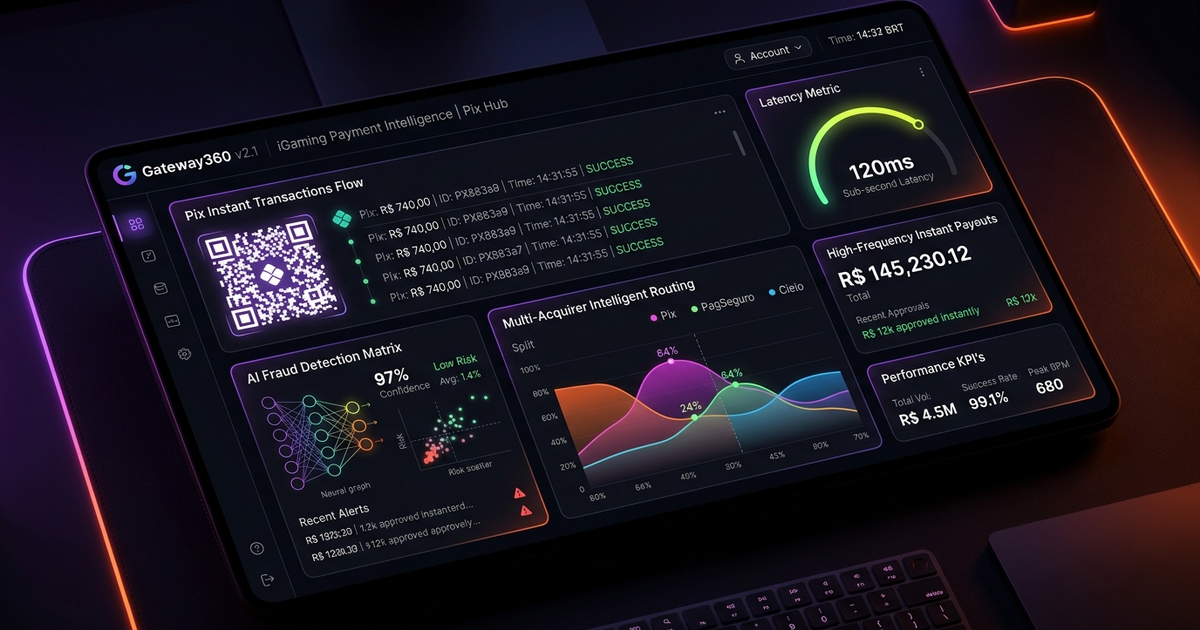
Platforms relying on a single acquirer or coupled PSP routinely leave 8% to 14% of valid payment volume behind due to issuer risk quirks, false-positive declines, and upstream outages. A White-Label Multi-Acquirer Processing architecture restores full commercial sovereignty through cascading Smart Routing, PCI-DSS Level 1 agnostic tokenization, and a native double-entry split ledger.
Discover Better2Better's White-Label Multi-Acquirer Orchestration Engine
Boost card approval rates and cut processing fees with real-time BIN-based Smart Routing, invisible cascading fallback retries, Visa/Mastercard Network Tokenization, and automated marketplace split accounting.
1. The Hidden Revenue Drain of Single-Acquirer Dependency and Token Lock-In
High-growth platforms frequently launch wired to a single payment service provider. While fast initially, this tight coupling creates compounding liabilities at scale: unmonitored issuer approval drops across specific card BIN ranges, zero resilience during partner outages, and proprietary card tokens that make switching providers nearly impossible without forcing recurring customers to re-enter billing credentials.
When a solitary acquirer returns a recoverable soft decline or gateway timeout, coupled checkouts surface a failed screen and permanently lose the customer. A white-label orchestrator executes routing intelligence in under 15 ms at the API layer, preserving authorization conversion and full ownership of your tokenized payment methods.
Architectural Comparison: Single Acquirer vs. Multi-Acquirer Orchestration
| Operational Criterion | Single Coupled PSP | White-Label Multi-Acquirer Better2Better |
|---|---|---|
| Card Approval Rate | Bound to one acquirer's risk appetite and issuer pipes | +4% to +11% typical uplift via Smart Routing + Cascading Retry |
| Card Token Custody (PAN) | Tokens locked inside proprietary acquirer vaults | Agnostic PCI-DSS Level 1 Vault + VTS/MDES Network Tokenization |
| MDR & Cost Optimization | Zero pricing leverage without active competition | Dynamic routing weighted by BIN, installment tier, and effective fee |
| Provider Downtime | Complete checkout outage during partner degradation | Sub-second transparent failover across connected acquirers |
| Marketplace Revenue Splits | Constrained to single-PSP payout schedules | Unified double-entry split sub-ledgers independent of clearing rail |
2. BIN-Aware Smart Routing and Invisible Cascading Fallback
Acquiring banks exhibit measurable authorization variance depending on issuing bank, card brand, currency, and installment type. The Smart Routing engine evaluates transaction metadata in real time before issuing any authorization frame:
- In-Memory BIN Classification: Resolves issuing bank, region, funding type (credit/debit/corporate), and brand within microseconds.
- Primary Route Optimization: Selects the acquirer exhibiting the highest historical approval ratio and lowest effective MDR for that exact issuer-currency corridor.
- Transparent Cascading Fallback: Whenever the primary acquirer answers with a network timeout, ISO 8583 91/96 issuer switch error, or eligible soft decline, the orchestrator retries transparently against the secondary acquirer in under 300 ms without erroring the UI.
- Hard-Decline Guardrails: Definitive rejections (stolen card, insufficient funds, invalid PIN) immediately halt retries to prevent scheme excessive-retry fines.
3. Token Sovereignty: PCI-DSS Level 1 Vault and Network Tokenization
Balancing volume dynamically across competing acquirers requires owning an independent cryptographic vault compliant with PCI-DSS Level 1 standards:
- Envelope Encryption via KMS/HSM: Raw PAN data is sealed at the edge with per-record DEKs wrapped inside FIPS 140-2 Level 3 HSM master keys, returning opaque vendor-neutral vault tokens.
- Native Network Tokenization (VTS & MDES): Direct scheme integrations convert stored cards into cryptographic Visa and Mastercard network tokens valid across all connected acquirers, improving issuer trust and approval rates by 2%–4%.
- Automated Account Updater: Silently refreshes reissued card numbers and expiration dates with card schemes, eliminating involuntary subscription churn.
4. Selective 3DS 2.3 Frictionless Routing and Unified Fraud Defense
Orchestrating multiple acquirers also requires decoupled fraud orchestration so risk scoring runs once rather than multiplying vendor costs across fallback hops:
- Adaptive 3D Secure 2.3 Policies: Low-risk returning profiles sail through frictionless authentication while high-value first-time orders trigger 3DS 2.3 to shift fraud chargeback liability onto the issuing bank.
- Pre-Routing Risk Scoring: Device intelligence, behavioral ML models, and velocity constraints evaluate transactions before initiating cascading bank calls.
- Unified Chargeback & Dispute Hub: Consolidates retrieval requests and representment evidence across all underlying acquirers into a single operator workflow.
5. Acquirer-Agnostic Multi-Party Split Engine
Marketplaces, franchise networks, and B2B SaaS ecosystems outgrow rigid single-acquirer split limits quickly. Our white-label engine enforces Ledger-Native Agnostic Splits:
- Programmable Commission Trees: Supports tiered percentage cuts, fixed fees, escrow-hold releases upon delivery confirmation, and chargeback reserve withholdings.
- Per-Seller Sub-Ledgers: Every merchant or partner maintains an auditable double-entry payable schedule unified across cards, instant bank rails, and alternative wallets.
- Automated Treasury Payouts: Clears aggregated net balances seamlessly into recipient bank accounts on configurable T+N or instant payout schedules.
6. Technical Specification: Multi-Acquirer Routing & Split Order Contract
Smart Routing & Split Authorization Payload (JSON)
Standard idempotent payload instructing the orchestrator how to apply network tokenization, cascading fallback rules, and multi-party splits:
{
  "idempotencyKey": "ord_66fa52c9-1182-4a91-b02f-8912de34a001",
  "merchantId": "mkt_enterprise_019",
  "amountCents": 189900,
  "currency": "USD",
  "installments": 1,
  "paymentMethod": {
    "type": "NETWORK_TOKEN_CARD",
    "vaultToken": "tok_vault_9823a1f0b",
    "bin": "411111",
    "brand": "VISA",
    "threeDSPolicy": "FRICTIONLESS_PREFERRED"
  },
  "routingPolicy": {
    "strategy": "HIGHEST_APPROVAL_LOWEST_COST",
    "cascadeFallback": ["acquirer_stripe_ent", "acquirer_adyen_direct", "acquirer_checkout_intl"],
    "retryOnCodes": ["SOFT_DECLINE_TIMEOUT", "ISO8583_91", "ISO8583_96"]
  },
  "splitPlan": [
    { "recipientId": "seller_4421", "type": "PERCENTAGE", "value": 86.50, "liableForChargeback": true },
    { "recipientId": "platform_fee", "type": "PERCENTAGE", "value": 13.50, "liableForChargeback": false }
  ]
}- vaultToken + NETWORK_TOKEN_CARD: Vendor-agnostic token resolved into scheme network credentials exclusively within the isolated CDE vault.
- cascadeFallback & retryOnCodes: Ordered failover chain restricting automatic retries strictly to non-definitive technical or network response codes.
- liableForChargeback: Controls which sub-ledger absorbs dispute debits and rolling reserve adjustments automatically.
7. Deterministic Retry Governance and Scheme Compliance
Naive cascading triggers scheme penalties for excessive authorization attempts. Better2Better's response classifier inspects granular ISO 8583 codes and issuer telemetry to guarantee retries occur exclusively when recovery probability exceeds cost and scheme limits.
ISO 8583 Response Classification Matrix for Deterministic Retries
| Issuer / Acquirer Response Code | Category | Orchestrator Action |
|---|---|---|
| Network Timeout / ISO 91 or 96 | Technical Soft Decline | Immediate (< 300 ms) transparent retry on secondary acquirer |
| Do Not Honor (05) w/ clean risk score | Eligible Soft Decline | Policy-controlled retry via secondary acquirer using network token |
| Insufficient Funds (51) / Expired Card (54) | Financial Hard Decline | Halt cascade immediately; trigger Account Updater if subscription |
| Suspected Fraud / Restricted Card (41/43/59) | Security Hard Decline | Block further attempts and blacklist fingerprint velocity |
8. PCI-DSS 4.0 Isolation, Data Privacy, and Audit Controls
Decoupling token storage from merchant backends dramatically shrinks regulatory compliance overhead:
- Minimized Cardholder Data Environment (CDE): Hosted Fields and isolated vault microservices isolate raw PAN handling from your core ERP and storefront.
- PCI-DSS 4.0 Enforcement: TLS 1.3 transport encryption, AES-256-GCM at rest, quarterly ASV scans, and hardware MFA for vault access.
- PII Masking in Observability: Automated PAN/CVV redaction across tracing pipelines plus strict retention schedules aligned with GDPR/LGPD.
9. SRE & Production Verification Checklist
Validate these operational safeguards before activating multi-acquirer smart routing in production:
[OK]Zero Raw PAN in Core Apps: Confirm application logs and ERPs store exclusively opaque vaultTokens captured via Hosted Fields.[OK]Restricted Retry Code Whitelist: Audit fallback triggers so definitive hard declines never generate duplicate scheme attempts.[OK]VTS/MDES Network Tokenization Live: Verify scheme credentials and fallback to primary PAN only when an issuer corridor lacks network token support.[OK]Simulated Acquirer Outage Drill: Inject HTTP 503 latency into primary acquirer sandbox confirming < 300 ms recovery on backup route.[OK]Split & Partial Refund Parity: Test partial captures and chargebacks verifying exact seller sub-ledger clawbacks.
10. Frequently Asked Questions on Multi-Acquirer Orchestration (FAQ)
How much conversion uplift does Smart Routing typically deliver?
By pairing BIN-level routing with automatic soft-decline fallback and network tokens, high-volume platforms commonly recover 4% to 11% in otherwise lost card approvals.
Do customers notice when a cascading fallback retry triggers?
No. The retry executes server-to-server across our isolated vault in under 300 milliseconds without clearing form fields or showing an error message.
Can we migrate away from an existing PSP without losing stored subscriber cards?
Yes. Using cooperative PAN exports into our agnostic PCI-DSS Level 1 Vault and activating Network Tokenization, you maintain uninterrupted recurring billing across any connected acquirer.
How does multi-acquirer split accounting reconcile different settlement schedules?
Our double-entry ledger abstracts each seller's payable schedule from the underlying acquirer's clearing cycle, unifying reporting and payout triggers cleanly.
Does multi-acquirer routing help reduce processing fees (MDR)?
Yes. Dynamic weighted routing shifts volume toward acquirers offering lower effective MDR per card brand and installment tier, generating immediate leverage in fee negotiations.
Do we need full PCI-DSS Level 1 certification on our own servers?
No. Because our Hosted Fields capture card inputs directly into our certified Level 1 Vault, your own backend operates solely on secure tokens.
Can instant rails like Pix, ACH, and SEPA share the same orchestration API?
Yes. All card acquirers, digital wallets, and instant local bank rails converge into one normalized API and webhook format.
Architect or scale this infrastructure in your operation
Speak directly with Better2Better principal systems architects to assess scale capacity, security requirements, integrations, and deployment timelines for your business.