
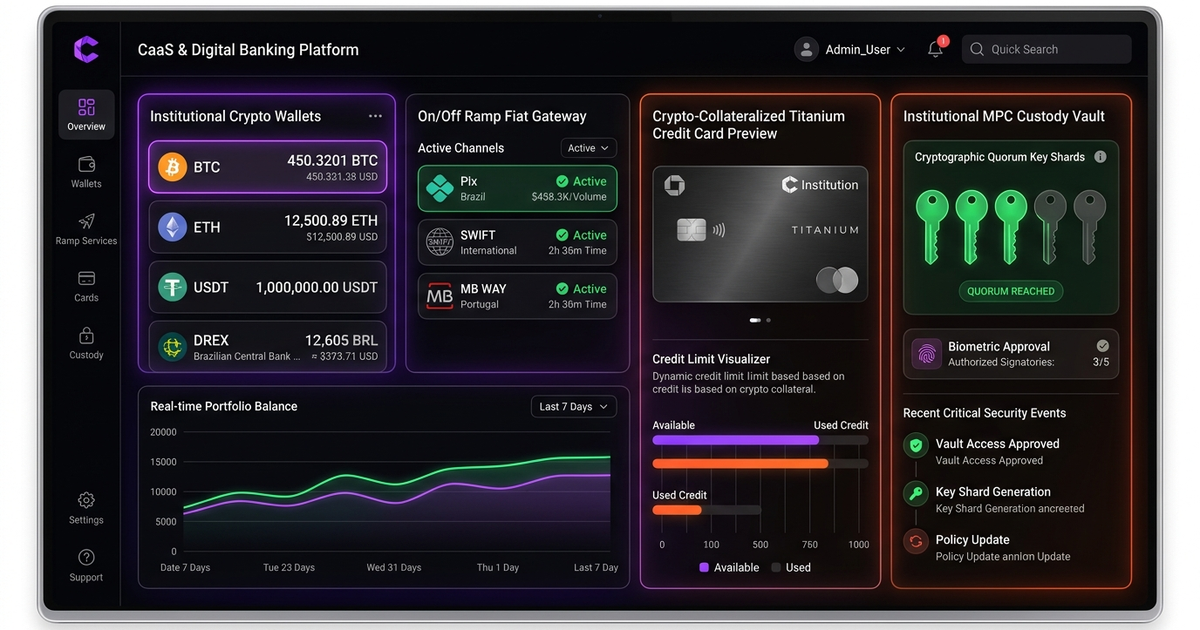
Modern digital banks face mounting customer demand for in-app crypto trading, stablecoin yields, and digital-asset-backed credit cards — yet modifying a regulated Core Banking ledger to track blockchain keys creates severe balance-sheet and audit risk. A decoupled CaaS Sidecar Architecture connects trading, regulated settlement, and crypto-collateralized cards seamlessly without exposing the bank's core ledger to custody liability.
Embed Enterprise CaaS Into Your Neobank with Better2Better
Deploy white-label digital asset trading, segregated MPC vaults with zero balance-sheet risk, regulated FX clearing, and real-time crypto-collateralized card limits inside your banking app in weeks.
1. Bridging Deterministic Banking Ledgers and Probabilistic Blockchains
Core banking runs on ACID double-entry fiat ledgers and central bank settlement finality, while blockchains handle asynchronous confirmation blocks and cryptographic signatures. Isolating crypto operations inside an event-driven CaaS Sidecar lets neobanks treat digital asset purchases identically to a standard transit settlement posting while offloading MPC vault security and KYT surveillance.
Architecture Comparison: Core Modification vs. Decoupled CaaS Sidecar
| Banking Requirement | Custom Core Bank Rewrite | Better2Better CaaS Sidecar |
|---|---|---|
| Balance Sheet Impact | Mixes volatile crypto liability directly onto bank books | Segregated third-party VASP/MPC custody completely off-balance |
| Mobile App Responsiveness | Blockchain RPC lookups stall banking home feeds | Sub-30 ms cached portfolio APIs synced into unified statements |
| Trade Execution Safety | D+1 batch breaks fiat vs. asset settlement parity | Atomic Core hold coupled to instant OTC RFQ price locks |
| Crypto Credit Line Cards | Requires full rewrite of ISO 8583 issuer logic | Real-time LTV margin engine feeding dynamic limits to your CMS |
2. Atomic Buy/Sell Flows with Configurable Spread Revenue
Two-step atomic holds safeguard the fintech from market drift between tap and clearing:
- Locked Quote + Bank Spread Display: Neobank injects custom tier margins (e.g., 0.8% retail, 0.25% private banking) atop guaranteed RFQ liquidity feeds.
- Atomic Core Banking Hold: User confirmation places an instant fiat hold on checking funds inside a dedicated settlement transit account.
- Segregated MPC Vault Settlement: Digital assets credit cleanly into customer-segregated vaults while net platform fees book directly to bank revenue.
3. Crypto Credit Cards: Revolving Spending Without Selling Assets
Rather than triggering taxable disposal events on everyday card purchases, continuous LTV (Loan-to-Value) monitoring powers seamless revolving credit:
- Dynamic Collateral Borrowing Power: Eligible BTC, ETH, or USDC balances project real-time credit lines (e.g., 50% LTV) straight into your card management system.
- ISO 8583 Real-Time Authorization: Purchases settle over Visa/Mastercard globally in local currency while pledged collateral stays safely vaulted.
- Flexible Statement Settlement: Cardholders pay monthly statements using checking balances (ACH/Pix/SEPA), keeping long-term crypto upside intact.
4. Federated KYC Onboarding and Unified Fiat + KYT Risk Controls
Neobanks already hold verified customer KYC records. Signed JWT federation activates crypto modules in one tap while edge KYT scanning quarantines tainted on-chain deposits prior to entering checking rails.
5. Monetization Levers: Trading Spreads, Cross-Border FX, and Card Interchange
CaaS unlocks high-margin fee streams — trading spreads, cross-border stablecoin corridors connected to SWIFT/MB WAY/Pix, card interchange, and segregated institutional yield sharing — without raising costly regulatory capital.
6. Technical Specification: Core Bank -> CaaS Sidecar Settlement Bridge
Atomic Neobank Hold & Segregated Vault Execution (JSON)
Dispatched by the bank's Core orchestration layer right after locking user checking funds:
{
  "bankOrderId": "bnk_ord_551290a8",
  "idempotencyKey": "5f9b8c71-2a3d-4e9b-910c-8820a149e010",
  "customerRef": { "bankAccountId": "chk_90124", "kycLevel": "TIER_3_VERIFIED" },
  "fiatHold": { "currency": "USD", "principalCents": 1000000, "bankSpreadCents": 12000 },
  "cryptoExecution": {
    "targetAsset": "BTC",
    "quoteId": "qt_otc_771920",
    "creditWalletType": "COLLATERAL_CARD_VAULT"
  },
  "settlementPartner": "regulated_vasp_custody_global"
}- bankSpreadCents: Cleanly segregates bank commission revenue from principal sent to OTC asset clearing.
- creditWalletType: Routes cleared balances directly to liquid trading vaults or collateralized card credit lines.
- kycLevel: Enforces verified tier eligibility before enabling external wallet transfers.
7. Continuous LTV Risk Monitoring and Zero Bad-Debt Protection
Sub-second aggregated price feeds drive deterministic margin thresholds, protecting issuer credit books during abrupt weekend crypto volatility without relying on slow L1 confirmations.
Real-Time Collateral Margin States (LTV Engine)
| Current LTV Ratio | Collateral Account State | Automated Engine Action |
|---|---|---|
| LTV ≤ 55% | Healthy | Full revolving credit line active inside card issuer switch |
| 55% < LTV ≤ 72% | Margin Notice | In-app push notification suggesting collateral top-up or partial repayment |
| 72% < LTV < 82% | Restricted Buffer | Temporarily freezes new card charges while preserving repayment paths |
| LTV ≥ 82% | Automated Partial Closeout | Fractional RFQ closeout protecting remaining customer equity and issuer credit |
8. Accounting Isolation, Multi-Signature Custody, and Regulatory Audits
Strict separation across customer deposits, FX transit ledgers, and VASP-regulated MPC vaults ensures external auditors verify zero unhedged balance-sheet exposure cleanly.
9. Neobank CaaS Integration & SRE Readiness Checklist
Validate end-to-end financial parity prior to rolling out to retail or business account holders:
[OK]Atomic Checking Hold Release: Confirm instant hold release on checking balances whenever an RFQ quote expires prior to fill.[OK]ISO 8583 Credit Line Parity: Validate real-time card limit updates immediately following collateral deposits or repayments.[OK]Synthetic Volatility Margin Drill: Simulate 25% market drop in sandbox verifying margin alerts and partial liquidation triggers.[OK]Spread Commission Ledger Check: Verify automated T+0 separation of bank commission revenue in double-entry sub-accounts.[OK]Pricing Feed Failover Validation: Test automatic fallback across redundant market-data feeds without stalling app trades.
10. Frequently Asked Questions on CaaS for Neobanks & Fintechs (FAQ)
Do we need to rewrite our existing Core Banking system?
No. The CaaS Sidecar integrates cleanly via REST/WebSocket APIs using a standard fiat transit ledger account inside your current Core.
Do digital assets sit directly on our bank's balance sheet?
No. Client assets reside off-balance inside segregated MPC vaults managed by our regulated settlement partner.
How does the crypto-backed credit card avoid forcing asset sales on every purchase?
Vaulted holdings serve as dynamic LTV collateral backing a Visa/Mastercard credit line; cardholders pay monthly bills in fiat while preserving asset exposure.
How does a neobank monetize embedded CaaS?
Banks control configurable trade spreads, cross-border transfer fees, card interchange, and revenue sharing on treasury staking yields.
Do bank users need to repeat KYC verification?
No. Federated KYC tokens verify existing bank identity checks cleanly so users opt in seamlessly within the mobile app.
How is the card issuer protected during sharp market drops?
Real-time LTV monitoring alerts borrowers early and triggers deterministic fractional liquidation well before collateral approaches zero.
Architect or scale this infrastructure in your operation
Speak directly with Better2Better principal systems architects to assess scale capacity, security requirements, integrations, and deployment timelines for your business.